


Institute of Clinical Psychology
Introduction
Prof. Dr. Sobia Aftab (Director)
Institute of Clinical Psychology is a reputable institute and has a distinguished status in the field of clinical psychology and research since it has been established. The Institute’s high quality training, research and congenial environment ensures its position as the institute of choice for Pakistan’s high-caliber postmasters students. The students of ICP are highly competitive and are working effectively in wide-ranging fields of employment. It is this reason that students of ICP are in high demand in various organizations. This has been made possible due to:
Educational Excellence
The Institute has a dexterous faculty working to maintain a standard in academics, research and clinical practices. Regular class schedule in morning session and supervised clinical practice in evening session makes a comprehensive training schedule to gain knowledge in the field of Clinical Psychology.
Intensive Clinical Supervision
Interns have to under go a rigorous training for clinical internship, including training in conducting psychotherapy, individually supervised therapy sessions and learning standardized patterns of administration, scoring, interpretation of psychological assessment tools and report writing. Further interns are also trained regarding diagnostic issues. The major aim is to make interns meet international standards required for working as a Clinical Psychologist. Moreover, there are weekly case conferences in which interns are encouraged to present their cases before the panel of clinical experts in order to receive guidance and exchange ideas amongst themselves.
Multidisciplinary Approach
The Institute focuses on a multidisciplinary approach in clinical practice. The interns are trained for conducting psychotherapeutic sessions using different approaches like Psychoanalysis, CBT, REBT, Multimodal Approach, etc. However depending on the needs of the patient, occupational Therapy, Speech Therapy, and Rehabilitation Services are also available within the premises of the Institute for the convenience of the patients. A Medical Officer is also available in order to examine the progress of the patients who are on medication.
During their extensive internship the interns are also required to assess and diagnose the patients by administering standardized psychoneurological, intelligence, achievement, aptitude, objective and projective personality tests.
Research and Development of Psychological Instruments
Institute facilitates research in multiple disciplines that includes clinical psychology, child and educational psychology, social psychology, consumer behavior and marketing research. In its vision to promote research, the institute facilitates its faculty to participate in research projects, and interns to conduct supervised researches. The Institute has been successful in conducting researches of international standards, and funds are raised every year to purchase psychological test material from international sources. There is also focus on translation of tests/scales in local language and then conducting normative studies in order to have statistics of psychological problems prevalent in Pakistan.
Cost Effective
ICP charges very reasonable fee for all available courses of Clinical Psychology to provide an equal opportunity for all deserving candidates.
Career Opportunities
In view of the growing awareness of the role of Clinical Psychologists in our social and national development there are increasing job opportunities in public as well as private sector institutions where clinical psychologists are bringing their specialized skills to bear in the diagnosis and treatment of emotional, behavioral, and adjustment problems, as well as in teaching and research.
Among prominent employers of Clinical Psychologists are included:
- Government and private mental health clinics and hospitals.
- Government and private general hospitals and medical clinics.
- Rehabilitation and training centers for the mentally retarded.
- Educational Institutions.
- Business and industrial organizations (public and private sectors).
- Armed Forces.
- Non-Governmental Organizations.
- Private Clinical Practice.
Director Message
Director Message
The Institute of Clinical Psychology (ICP), University of Karachi, is committed to providing high-quality professional education and specialized training in clinical psychology, with the aim of producing skilled, competent and ethically responsible clinical psychologists capable of addressing mental health needs of the society.
In today’s rapidly evolving global landscape marked by rising mental health challenges and growing awareness of psychological well-being, the demand for qualified mental health professionals capable of delivering effective, evidence-based psychological services is greater than ever. Since its inception, the ICP has consistently pursued excellence in academics, clinical training, and research, while aligning its academic programs with internationally recognized standards and best practices in Clinical Psychology.
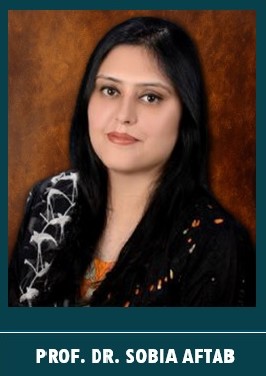
Today, the ICP holds a distinguished position as one of Pakistan’s pioneering institutions in the field of Clinical Psychology in Pakistan.The ICP has nurtured a substantial number of M.Phil and PhD graduates who are serving with distinction in academia, healthcare, research, and various public and private sector organizations throughout Pakistan. The ICP alumni hold key positions in universities, psychiatric and general hospitals, rehabilitation centers, and multidisciplinary healthcare settings, where they play an essential role in psychological assessment, diagnosis, intervention, and rehabilitation. They are also serving in mainstream and special education institutions as school counselors, rehabilitation psychologists, and mental health practitioners. The achievements and professional accomplishments of ICP alumni are a testament to the Institute’s sustained commitment to excellence in education, clinical training, and research, and its pivotal role in advancing Clinical Psychology profession in Pakistan.
The ICP is supported by a highly competent faculty and dedicated staff with strong academic and professional expertise. Most faculty members have received specialized training from reputable international institutions, bringing valuable global perspectives to teaching and clinical practice. Students are supported in their ethical and professional development through individualized, supervised programs in clinical and research domains. They also benefit from a range of professional training courses and workshops delivered by national and international experts.
Faculty
Teaching Faculty
1
Prof. Dr. Uzma Ali
Director / Professor
2
Prof. Dr. Riaz Ahmad
Professor
3
Prof. Dr. Kausar Ansari
Professor
4
Dr. Hina Imran
Associate Professor
5
Dr. Sobia Aftab
Associate Professor
6
Dr. Salman Shahzad
Associate Professor
7
Dr. Hina Ayaz
Assistant Professor
8
Dr. Shafaq Ahmad
Assistant Professor
9
Dr. Nasreen Bano
Assistant Professor
10
Dr. Sanober Khanam
Assistant Professor
11
Dr. Rabia Mushtaq
Assistant Professor
Clinical Staff
1
Dr. Raheela Khatoon
Speech Therapist
2
Ms. Tehmina Syed
Speech Therapist
Other Staff
1
Mr. Syed Tariq Rahim
Jr. Admin Officer
2
Mr. Farooq Sheikh
Supritendant
3
Mr. Syed Kashif Imran
Accounts Officer
4
Ms. Saba Ghulam
Librarian
FORMER FACULTY
1
Farrukh Z. Ahmad, Ph.D., Clinical Psychology, (Stanford University, U.S.A.), D.Sc., M.D. (Medicina Alternative). Former Professor and Founder Director, Institute of Clinical Psychology, University of Karachi, 1983 to 1999.
2
Theriault Todd, Ph.D., Clinical Psychology (Emory University, U.S.A.), Fulbright Scholar, Institute of Clinical Psychology, January 1983 to December 1984.
3
Fauzia Javed, D.Sc., Clinical Psychology (Ghent University, Belgium), Assistant Professor, Institute of Clinical Psychology, August, 1984 to January 1986.
4
Veneta S.N. Brummel-Teneva, Ph.D., Clinical Psychology (Amsterdam University), Visiting Professor, Institute of Clinical Psychology, March 1986 to November 1986.
5
John S. Gillis, Ph.D. Clinical Psychology, (Colorado University), Professor, Oregon State University, U.S.A. Visiting Professor, Institute of Clinical Psychology, Summer 1984 to Summer 1986.
6
Saleh Jaleel, Ph.D., Clinical Psychology, Former Associate Professor, Institute of Clinical Psychology, March 1984 to November 1999.
7
Eva Hasan, Ph.D., Clinical Psychology, Former Assistant Professor, Institute of Clinical Psychology, University of Karachi. March 1985 to July 1992.
8
Afzal Imam, Ph.D., Experimental Psychology (Wales), Former Director, & Adjunct Professor, Institute of Clinical Psychology, 1984 to 1995.
9
Hilal A. Shaikh, Ph.D., Physiology (Ontario University, Canada) Adjunct Professor, Institute of Clinical Psychology, 1985 to 1992.
10
Wiqar Zaidi, Ph.D., Educational Psychology (Stanford University, U.S.A.), Former Principal, Population Welfare Training Institute, Karachi Adjunct Professor, Institute of Clinical Psychology, 1986 to 1992.
11
Masoodul Haq, M.A., Statistics, Former Chairman / Professor, Department of Statistics, Adjunct Professor, Institute of Clinical Psychology, 1989 to 1996.
12
Musarrat Alam Khan, Ph.D., Clinical Psychology, Former Associate Professor, Institute of Clinical Psychology, July 1992 to April 2004.
13
Samira Maniar, Ph.D., Clinical Psychology, Former, Assistant Professor, Institute of Clinical Psychology, University of Karachi, Jan 1988 to July 2001.
14
Nargis Asad, Ph.D., Clinical Psychology, Former Assistant Professor, Institute of Clinical Psychology, July 1992 to Feb 2004.
15
Saiqa Khan, Ph.D., Clinical Psychology, Former Research Officer, Institute of Clinical Psychology, July 1992 to July 2003.
16
Khalida Shafi, Ph.D., Clinical Psychology, Part time Cooperative Teacher, Institute of Clinical Psychology, Jan 2000 to March 2004.
17
Ambreen Zulfiqar, M.A, Post Magistral Diploma in Clinical Psychology, Research Officer, Institute of Clinical Psychology, August 1994 to Oct 2000.
18
Amber Farooq, Ph.D. (Clinical Psychology), Research Officer, Institute of Clinical Psychology, Oct 2001 to June 2004.
19
Masood Qureshi, Ph.D. (Physiology), Visiting Faculty, Institute of Clinical Psychology, August 1996 to December 2005.
20
Zeenat Ismail, Ph.D. (Clinical Psychology), Cooperative Teacher, Institute of Clinical Psychology, August 2004 to December 2004.
21
Prof. Junaid S. Siddiqui, (Statistics) Visiting Faculty, Institute of Clinical Psychology, January 9, 1997 to December 5, 2007.
22
Erum Maqbool, Ph.D. (Clinical Psychology), 2005 to April 2008. Assistant Professor, Institute of Clinical Psychology,
23
Shazia Hassan, Ph.D. (Clinical Psychology), Assistant Professor, Institute of Clinical Psychology, Feb 2005 to Jan 2010.
24
Urooj Sadiq, Ph.D. (Clinical Psychology), Assistant Professor, Institute of Clinical Psychology, May 2005 to Dec. 2011.
35
Sarwat Jahan Khanum, Ph.D. (Clin.Psychol.), P. M. D. (Clin.Psychol.), M.Sc. (Psy), Associate Professor, February 2004 to June 2020
26
Seema Munaf, Ph.D. (Clin.Psychol.), P.M.D. (Clin.Psychol.), M.A. (Psy), Professor (Meritorious), February 1986 to September 2020
27
Zaeema Riaz, Ph.D. (Clin.Psychol.), P.M.D. (Clin.Psychol.), M.A. (Psy) , Professor, March 20007 to January 2021
28
Fazeela Mughal, Ph.D. (Clin. Psychol.) P. M. D. (Clin.Psychol.), M.A. (Psy) Assistant Professor, October 2014 to February 2021
Programs
The programs offered at the Institute are intensive and require students to work practically with patients. In addition to the teaching of various disciplines of Clinical Psychology, training in research as well as internship and Didactic Analysis requirements, make up integral parts of these programs. Students are provided opportunities to carry out training in diagnostic testing, psychotherapy, and research under supervision, thereby gaining valuable experience.
The programs offered are:
| 1 | Ph.D. in Clinical Psychology (24 Months Duration) | |||
| 2 | M.Phil in Clinical Psychology (24 Months Duration) | |||
| 3 | Post Magistral Diploma in Clinical Psychology (PMDCP) (12 Months Duration, Full Time) | |||
| 4 | Diploma in Rehabilitation for Childhood Disorders (DRCD) (12 Months Duration, Evening) | |||
| 5 | Post Magistral Diploma in Addiction Sciences (PMDAS) (12 Months Duration, Full Time) | |||
| 6 | Diploma in Complementary Therapy: Hypnosis & NLP (12 Months Duration, Part-time) | |||
| S.No. | Programs | Prerequisite | Coursework (during 1st – Year) |
Supervised Internship (during 2nd – Year) |
| 1 | PhD in Clinical Psychology (Total Credit hrs=116) + (Ph.D. Credit hrs=53) Total=169 |
M.S in Clinical Psychology OR M. Phil. in Clinical Psychology |
33 Units of Internship ( Psychotherapy hours & Psycho diagnostic reports over a period of 1 year in 3 semesters) | 25 Units of Didactic Analysis over a period of 1 year in 3 semesters) + *20 Units of PhD Research Dissertation at the end of 3rd year) |
| 2 | PhD in Clinical Psychology (Total Credit hrs=116) + (Ph.D. Credit hrs=53) Total=169 |
M.S in Psychology in any discipline of Psychology (other than Clinical Psychology) OR M. Phil. in Psychology in any discipline of Psychology (other than Clinical Psychology) |
52 Units of required compulsory & optional course work and thesis + 96 Units of Internship (Psychotherapy hours & Psycho diagnostic reports over a period of 2 year in 6 semesters) |
25 Units of Didactic Analysis over a period of 1 year in3 semesters) + *20 Units of PhD Research Dissertation the end of 3rd year) |
| 3 | M.Phil in Clinical Psychology (Total Credit hrs=116) |
M.A / M. Sc in Psychology OR B.S. (4 years) (at least 2nd division) |
50 Units of required compulsory & optional course work and thesis + 66 Units of Internship (Psychotherapy hours & Psycho diagnostic reports over a period of 1 year in 3 semesters) |
04 Units of required compulsory 1 course work + 40 Units of Internship (Psychotherapy hours & Psycho diagnostic reports, over a period of 1 year in 3 semesters) + *10 Units M.S. Research thesis |
| 4 | Post Magistral Diploma in Clinical Psychology (P.M.D.C.P) (Total Credit hrs=62) |
M.A / M. Sc in Psychology OR B.S. (4 years) (at least 2nd division) |
32 Units of required compulsory & optional course work + 30 Units of Internship (Psychotherapy hours & Psycho diagnostic reports & Research over a period of 1 year in 3 semesters) |
NA |
| 5 | Diploma in Rehabilitation of Childhood disorders (DRCD) (Total Credit hrs=48) |
M.A / M. Sc in Psychology or Special Education OR B.S. (4 years) (at least 2nd division) |
28 Units of required compulsory & optional course work + 20 Units of Internship (Psychotherapy hours & Psycho diagnostic reports over a period of 1 year in 2 semesters) |
NA |
| 6 | Post Magistral Diploma in Addiction Sciences (P.M.D.A.S) (Total Credit hrs=44) |
M.B.B.S. (with house job) or M.A./M.Sc. (minimum second class) in Psychology, Social Work, Sociology & Nursing (at least 2nd division) | 24 Units of required compulsory & optional course work + 20 Units of Internship (Psychotherapy hours & Psycho diagnostic reports over a period of 1 year in 2 semesters) |
NA |
| 7 | Diploma in Complementary Therapy: Hypnosis & NLP |
M.A / M. Sc in Psychology OR B.S. (4 years) (at least 2nd division) |
100 CEC hours including Internship | NA |
Objectives
Mission Statement
To develop an optimum standard of clinical practice, research and professional training in clinical psychology and broadening its scope by grafting its application in other related disciplines.
Objectives
The Institute of Clinical Psychology is already being recognized as one of the premier institutions in Pakistan, where Professional training and services of international standard in the field of clinical psychology are offered. The Institute of Clinical Psychology, University of Karachi aims to achieve the following objectives:
- To expand the growth and strengthen the status of Clinical Psychology as a profession in Pakistan and to impart specialized training in this field.
- To promote research suited to our own social cultural milieu in psychotherapy, psychological assessment, diagnostic testing, speech therapy, occupational therapy, rehabilitation and other related areas.
- To bridge the highly disproportionate gap between "demand" (needs of psychologically treatable patients) and "supply" (availability of qualified clinical psychologists).
- To help patients who are mentally disturbed or have behavior problems to function at higher levels, live fuller and richer lives and be able to give more of themselves to their society.
- To stop the draining out of talent; it is expected that students aspiring to be clinical psychologists will avail these training facilities provided within the country in an environment which teaches them to do clinical practice in a culturally appropriate way.
Message from the Vice Chancellor
Institute of Clinical Psychology, University of Karachi is contributing a great deal towards advancement of postmaster professional education in clinical psychology in Pakistan. The Institute has developed a system of gradual, consistent and effective improvement of training at postmasters level and is continuously striving to improve its academic standards, training and evaluation system to achieve the international status. The faculty of the Institute consists of distinguished professionals from different fields.
Institute facilitates research in multiple disciplines and has been successful in conducting researches of international standards. In order to expand the horizon of learning, it has also been establishing academic affiliations with leading institutions of the region and developed world. The institute regularly organizes a series of workshops and short courses for the continued professional growth of mental health professionals. Experienced mental health educationists from within country and abroad are invited to conduct these courses and training programmes.
ICP is proud to provide the bulk of clinical psychologists and teachers in the country who are performing with a spirit to bring out the best in prevention and treatment of psychological disorder and clinical research.
I pray to almighty Allah and seek His blessings to give us courage in achieving yet higher standards and goals.
Ameen.
Founder's Message
I am immensely pleased that the Institute of Clinical Psychology, University of Karachi is continuously striving and improving the standards of education as well as professional training in the field of Clinical Psychology. With the advent of new scientific knowledge of science and technology and growing awareness among the general public, it is obvious that we, in the Institute of Clinical Psychology, University of Karachi should also develop the same latest advancement in the course of studies being taught in the Institute of Clinical Psychology, University of Karachi so that students with advance studies/training should tackle challenges of Clinical Psychology in their respective Institutions/organizations where they utilize their education/training as a profession. We are more than confident with our faculty, clinicians as well as other professional staff that in future they will too work hard with the same zeal and motivation they are doing right now for a better scenario in the Institute of Clinical Psychology, University of Karachi in future. With the advent of new scientific knowledge, it has become imperative that we keep the course and syllabi embressed with changes in the science and training of Clinical Psychology.
Director's Message
The field of Clinical Psychology is a broad branch of psychology that focuses on diagnosing and treating mental, emotional, and behavioral problems in general. The aim of Institute of Clinical Psychology, university of Karachi is to provide professional education and training in clinical psychology and to produce competent clinical psychologists in the country. Considering the global scenario, people are facing different challenges in the sphere of mental health, and with the increased awareness regarding mental health problems; people are concerned regarding the quality of treatment. Institute of Clinical Psychology since its establishment has been working in different domains such as academic, clinical and research and always tries to meet International Standards. In the recent years ICP has attained the status of the pioneer Institute of University of Karachi in the field of Clinical Psychology, which had produced approximately, one hundred, M.Phil (s) and Ph.D (s) in the field of Clinical Psychology. Our Alumni are working in variety of discipline in multiple organizations and Universities of Pakistan. They are also being hired in different hospitals which have psychiatric setups as well as in other departments where clinical psychologists provide their services. The scope has also been extended to different schools including special schools, as school counselors and rehabilitation psychologists. Institute of Clinical Psychology has a competent faculty and supporting staff equipped with knowledge and professional skills. Most of our faculty members have been trained in specialized fields from abroad. They have expertise along with passion and enthusiasm to work for human being's to bring positive change in the society. Students are also encouraged to grow ethically and professionally, and for this purpose individualized supervised programs are being offered in clinical and research domain. They are also being provided with professional training courses and workshops by National as well as International trainers. I welcome you all to join Institute of Clinical Psychology, to learn and become the part of our mission.
History
The Institute of Clinical Psychology was created under a directive of General Muhammad Zia-ul-Haq, President, Islamic Republic of Pakistan. Prof. Dr. Farrukh Z. Ahmad, who originally conceptualized the idea of establishing an Institute, was appointed as its first director. The Institute has its own Board of Governors, a Selection Board, and an Academic Committee in accordance with its Statues which have been passed by the Senate of the University of Karachi and the Governor of Sindh in his capacity as the Chancellor of the University.
The Institute of Clinical Psychology, University of Karachi was established in response to the dire need for mental health professional and the acute dearth of professional psychological services in Pakistan. Till 1983, when the Institute came into being, no professional training facilities existed for Clinical Psychologists in Pakistan. Courses in Clinical Psychology offered at the Master's level by the department of Psychology of various universities were merely aimed at familiarizing students with the subject matter, scope and some methods used in this area, without providing them opportunities to develop skills necessary to the practice of and research in clinical psychology. Students desirous of becoming clinical psychologists have been going abroad for the necessary specialized training, and rarely, if ever, return to Pakistan, thereby adding to the problem of "brain drain". Moreover, with the increasing incidence of mental health problems, psychologically disturbed persons are grossly under served in terms of professional help, which can only be given by qualified clinical psychologists. The above-mentioned factors, as well as the fact that indigenously trained professionals would be better able to deal with problems specific to our own culture made the creation of an institution devoted to the education and training of qualified clinical psychologists an absolute necessity and of vital importance to our social and national development.
The Institute of Clinical Psychology, University of Karachi has a total land endowment of 25.5 acres out of which 3 acres have been donated by the Government of Sindh in the heart of the city of Karachi and a plot measuring 22.5 acres of land has been allocated by the University of Karachi in its own campus.
A Psychological Clinic, a Library and some of the academic and administration facilities of the Institute of Clinical Psychology, University of Karachi have been built on the 3-acre plot of land. The address of its site is: 118, Block 20, Abul-Asar Hafeez Jalindhri Road, Gulistan-e-Jauhar, Karachi-75290, Pakistan. The proximity of this plot to the city centre and its consequent accessibility for the patients to Psychological Clinic of the Institute of Clinical Psychology was the prime reason why a location was selected outside the campus of the University of Karachi which is inaccessible to the majority of patients and technically unsuitable for the profession of Clinical Psychology.
Directors of Institute of Clinical Psychology Since 1983 to Date:
| Order | Name |
|---|---|
| 1 | Prof. Dr. Miss Farrukh Z. Ahmad |
| 2 | Prof. Dr. Kaleemur Rehman |
| 3 | Prof. Dr. Afzal Imam |
| 4 | Prof. Dr. Miss Farrukh Z. Ahmad |
| 5 | Prof. Dr. Afzal Imam |
| 6 | Prof. Dr. Tahira Siddiqui |
| 7 | Prof. Muhammad Shamim Hashmi |
| 8 | Prof. Dr. Tahira Siddiqui |
| 9 | Prof. Dr. Arifa Fareed |
| 10 | Prof. Dr. Nisar Ahmad |
| 11 | Prof. Dr. Seema Munaf |
| 12 | Prof. Dr. Muhammad Shamsuddin |
| 13 | Prof. Dr. Riaz Ahmad |
| 14 | Prof. Dr. Uzma Ali |
Research
Owing to the intensive nature of the courses offered each class at the Institute is composed of not more than 40 students. From 1983 to December 2022, number of students has been professionally trained in the field of Clinical Psychology are listed below:
| S# | Course | Trained Professionals | |
| 1 | Ph.D. in Clinical Psychology | 150 + | |
| 2 | M.Phil in Clinical Psychology | 200 + | |
| 3 | Post Magistral Diploma in Clinical Psychology | 300 + | |
| 4 | Diploma in Rehabilitation for Childhood Disorders | 150 + | |
| 5 | Diploma in Complementary Therapy: Hypnosis & NLP | 50 + | |
| 6 | Ph.D. in Clinical Psychology (In Process) | 30 + | |
| 7 | M.Phil in Clinical Psychology (In Process) | 70 + | |
| 8 | Post Magistral Diploma in Clinical Psychology (In Process) | 20 + | |
| 9 | Diploma in Rehabilitation for Childhood Disorders (In Process) | 20 + | |
| 10 | Diploma in Complementary Therapy: Hypnosis & NLP (In Process) | 10 + | |
| 11 | Post Magistral Diploma in Addiction Sciences (In Process) | 20 + | |
Ph.D. Research
Name
Topic
1
Dr. Zeenat Ismail
Determinants of Remainers and Terminators in Psychotherapy (1988).
2
Dr. Khalida Shafi
Psychological Risk Factors of Heroin Abuse in Pakistan (1989).
3
Dr. Eva Hasan
Standardization of Draw-A-Person (D.A.P.) Test in Pakistan (1990).
4
Dr. S. Saleh Jaleel
Normative Study of the Rorschach on College Students in Pakistan (1990).
5
Dr. Seema Munaf
Vulnerability to Anxiety in Adults as Function of Loss as Early Traumatic Experience (1990).
6
Dr. Sohaila Raees
Norming of the Thematic Apperception Test in Pakistan (1993).
7
Dr. Samira Arshad
Personality Characteristics of Psychotherapists and their Effect on Therapeutic Outcome (1996).
8
Dr. Nargis Asad
Study of Relationships Among Childhood Parental Loss, Sex Role Orientation, Self Esteem and Locus of Control in Male and Female Students (1999).
9
Dr. Saiqa Khan
Moderator Variables in Vulnerability to Anxiety: Social Support and Resilience (1999).
10
Dr. Musarrat Alam Khan
Frequency of Hostility and Hostility Anxiety Responses in Remainers and Terminators in Psychotherapy (1999).
11
Dr. Ghaus-ur-Rehman
Psychological Risk Factors in the Disorders of Cardiovascular System(2000).
12
Dr. Shazia Nazir
Psychological Reactions to Divorce of Divorced Women and their Children (2001).
13
Dr. Sajida Agha
Suicidal Behavior as a Function of Psychological Risk Factors. (2001).
14
Dr. Erum Maqbool
Relationship Between Self Concept and Achievement Among Reading and Non Reading Disabled School Children (2003).
15
Dr. Riaz Ahmad
Psychological Effects upon Children of Working Women in Different Family Structures of Pakistan (2003).
16
Dr. S. Tahira Quaid
Effect of Clinical Training on Outcome of Psychotherapy (2003).
17
Dr. Uzma Farhat
Substance Addict Fathers and Psychological Problems of their Children (2003).
18
Dr. Amber Farooq
The Effectiveness of Emotional Intelligence in Academic Achievement (2003).
20
Dr. Kausar Ansari
Personality Traits and Socio-economic status as Predictors of Marital Adjustment in working women (2004).
21
Dr. Zaeema Siddiqui
Family Functioning and Psychological Problems as Risk Factors in the Development of Juvenile Delinquency (2004).
22
Dr. Zainab H. Bhutto
Psychological Problems as a Result of Perceived Maladaptive Parental Styles (2005).
23
Dr. Amna Zehra Ali
Parenting Stress and Coping Behavior in Mothers of Children with Special Needs (2006).
M.Phil. / Ph.D. Research
Name
Topic
1
Ms. Ayesha Mohajir
Vulnerability to Depressed Mood as a Function of Response Styles
2
Mrs. Khalida Rauf
The Relation of Emotional Intelligence and Learning Disabilities in School Children.
3
Ms. Uzma Zaidi
Social Support and Personality Features as Risk Factors in Vulnerability to the Treatment Rejection in Heroin Addicts.
4
Ms. Zi Asma Haneef Khan
Religiosity and Coping in Cancer Patients.
5
Mrs. Rizwana Izzat
Single Parenting as a Risk Factor for Anxiety, Depression and Behavioral Problems in Adolescents.
6
Mr. Haroonur Rashid
Family Functioning and Low Self Concept of Adults as Indicator of Vulnerability to Psychopathology.
7
Ms. Sarwat Jahan
Paranoid Ideation as Predictor of Performance on Cognitive, Perceptual and Object Relation Measures of Wechsler's Adult Intelligence Scale- R. (WAIS-R)
8
Ms. Arshi Ali
Adult Psychological Problems as a Determinant of Abused Childhood.
9
Ms. Saadat Jabeen
Teacher's Mental Health and Self-Esteem: a Study of Students' Discipline and Academic Achievement.
10
Ms. Sakina Raza
A Study of the Personality of Patients Suffering from Neurological Disorders.
11
Ms. Uzma Ahmed
Behavior Techniques: Its Applicability in the Reduction of Maladaptive Behavior of Autistic Children
12
Ms. Fatima Z. Bukhari
Neuropsychological Dysfunction , Psychological Instability and Level of Achievement in individuals with Epilepsy.
13
Ms. Monica Shabir
A Comparitive Study of Intellectual Functioning of Adults with Depression, Obsessive Compulsive disorder and Schizophrenia.
14
Ms. Shazia Ilyas
Maternal Depression: Academic Achievement , Aggression and Self Esteem of Children
15
Mr. Shahid Iqbal
Mental Health Problems of Adolescents: A Comparison Between Religious Minorities and Their Dominant Counterparts in Pakistan.
16
Ms. Urooj Sadiq
Psychosocial Determinants of Depression in Prenatal and Postnatal Period.
17
Mr. Khawer Bilal
Emotional Intelligence and Marital Adjustment of Dual Earner Spouses in Pakistan.
18
Ms. Saba Zain
Religious Orientation and Vulnerability to Psychopathology in Adults.
20
Ms. Hina Imran
Self Esteem & Academic Achievement: A Study on Secondary School Children of different Socioeconomic Classes in Pakistan.
21
Mr. Muhammad Rizwan
Low Self Esteem As Vulnerability Factor For Psychopathology.
22
Mr. Salman Shazad
Psychological Well Being of Intellectually Gifted Secondary School Children.
23
Ms. Sobia Aftab
Attributional Style and Hopelessness: Vulnerability to Depressive Symptomatology in Adolescence.
24
Ms. Sarwat Malik
Effect of Abuse on The Academic Achievement of Young Children.
25
Ms. Rabia Riaz
Effectiveness of Cognitive Behavior
Publications
Pakistan Journal of Psychology (PJP)
The Pakistan Journal of Psychology is the official publication of the Institute of Clinical Psychology, University of Karachi under the editorship of the Director, Institute of Clinical Psychology. This journal has been recognized for indexing by Psychological Abstracts, WHO's Regional Index Medicus and is a member of ExtraMed Consortium.PJP is also recognized by medical literature indexing service Pakistan (Medlip).
View Abstracts
View Editorial Board
Online
http://www.emro.who.int/HIS/VHSL/Resources-imemr.html
http://www.pastic.gov.pk/SearchD.asp
http://www.parc.gov.pk/Announcements/List-of-Journals.html
Pakistan Journal of Clinical Psychology (PJCP)
This Journal has been published biannually from 1992 to 1995 from the Institute of Clinical Psychology, University of Karachi. It has been republished from 2006 regularly
View Editorial Board
Motivation ( Newsletter)
This newsletter has been published biannually from 2004. This newsletter is a bold step to build up effective communication, coordination and awareness among mental health professionals in Pakistan.
Books and Manuals
The following books have been published by the Institute of Clinical Psychology:
- Development of Norms and Application of Wide Range Achievement Test 3 in Pakistan - Trends in Adolescence
Authors : Riaz Ahmad, Zaeema Riaz & Sarwat J. Khanam
Publishing Year : 2005 - Child Rearing Practices and Mental Health in Pakistan
Authors : Farrukh Z. Ahmad
Publishing Year : 1993 - Dependency in Psychotherapy
Authors : Farrukh Z. Ahmad
Publishing Year : 1988 - Clinical Practice: Codes, Control and Ethical Decision Making
Developers : Uzma Ali, Kausar Ansari ,Riaz Ahmad & Muhammad Shamsuddin
Publishing Year : 2007
Facilities
In the planning of the Institute of Clinical Psychology, University of Karachi, following facilities has been included in order to make it exclusive for the training of Clinical Psychologists in Pakistan:
- The Institute is defined as the academic and research facility of the Institute of Clinical Psychology. Only a part of this facility has been completed in the first phase of the Building Complex of the Institute of Clinical Psychology, in which practicum, seminars and tutorials in addition to lectures are conducted.
- The Rehabilitation center of the Institute is now under process of construction as a part of accomplishment of the second phase of the Building Complex.
- The research wing is equipped with computers, video recorders, biofeedback instruments, Psychological tests/scales and other technical equipment the use of which is imperative for high quality research in the field of Clinical Psychology. Small research cubicles are also be provided in order to facilitate uninterrupted and undisturbed work by researchers.
- The classrooms are fully equipped with latest teaching equipments.
- Students are provided with computers and Internet facility, a fully equipped computer lab is under construction.
- Photocopying and Printing facilities are also provided on discretionary rates for students.
- A well comprehensive Library comprising of 50,000 volumes is available for the students. Students can also use main library of the University of Karachi.
- Student Advisor is a unique facility for students having problems related to academic or non-academic issues. They can approach and discuss their problems with complete assurance of confidentiality.
- Hostel facility is available for female students in main campus of University of Karachi.
Psychological Clinic
The Psychological Clinic is defined as the facility where the internship requirements of the students enrolled in the Institute of Clinical Psychology, University of Karachi are catered for. As part of their training, clinical psychologist conduct psychological assessments, counseling, psychotherapy, marital, family and vocational guidance on patients and clients of diverse ages and socioeconomic backgrounds with a wide variety of psychological, interpersonal and emotional problems. The Psychological Clinic has psycho-diagnostic and psychotherapy cubicles, reception and waiting areas for patients. Emergency alarms and other modern facilities are also provided in the Building Complex.
- At present the Psychological Clinic also offers the following outpatient services to the general public:
- Psycho-diagnosis and Psychological Testing
- Psychotherapy
- Behavior Training for Mentally Retarded / Developmentally Deficient Clients and the Emotionaly handicapped
- Family and Marital Counseling
- Speech & Language Therapy
- Student Counseling and Guidance
- Personnel Selection
Library
The building of the library has been completed in the first phase of the Building Complex. It is going to be equipped with most modern facilities for the establishment of a highly sophisticated library.
The library will have reading and reference sections as well as lending facilities. In addition to place for the shelving and storage of up to 50,000 books and periodicals it is also planned to have seating arrangements for up to 100 persons. The library will also have facilities for cataloguing, photocopying, binding and microfilming.
In addition to this, the student of the Institute of Clinical Psychology can also utilize the facilities of the main Library of University of Karachi.
Rehabilitation Centre
Temporary arrangements for rehabilitation facilities has already been made on the existing available land of the Institute of clinical Psychology. However, the permanent unit of the rehabilitation centre is now under construction. This centre will have house facilities for the rehabilitation, vocational training and recreation of patients and clients who will be referred from the Psychological Clinic. Skills, including carpet weaving, carpentry, electrical work, music and art, will be encouraged and taught in separate workshop under the guidance of trained professionals who will be supervised by trained and qualified Clinical Psychologists to promote therapeutic and rehabilitation goals. Care is being taken to provide different and physically separate facilities for both sexes.
Day Care Centre
A temporary day care centre for the education, training, and treatment of emotionally handicapped children is shortly going to be established. The permanent center which will be constructed as a part of the second phase of the Institute's Building Complex is planned to be a childrens' and adolescents' day treatment and rehabilitation centre. Its services will cater to the following 3 categories: (i) the emotionally disturbed, (ii) the neurologically handicapped, and (iii) the mentally retarded. Individual / group treatment, and rehabilitation programs will be conducted separately for each of these categories. Arrangements are also being made for separate facilities for both sexes.
Service elements and methods for these programs will include: small classroom for re-educational programs, pre-vocational training, job counseling, group therapy, Occupational therapy, speech therapy and art therapy.
The key objectives of the day treatment programs are:
a. To improve client's ability to function within the community.
b. To improve the family's ability to effectively manage these youngsters.
c. To keep youngsters out of the legal system.
d. To reduce the number of admissions to hospitals.
e. To return youngsters to the school setting.
Rehabilitation Farming
Since Pakistan is basically an agricultural country a large plot of land will also be provided with farming facilities for the treatment and rehabilitation of patients upon the recommendation of the experts of the Institute. These patients will be sent to the farming facility provided on five acres of land located on the Institute of Clinical Psychology's 22.5 acre plot of land in the University of Karachi campus.
Gymnasium
A gymnasium will be constructed in the second phase of the Building Complex in order to supplement the day care centre and rehabilitation centre by fulfilling clients' recreational needs as well as for the remediation of children's motor skills deficits.
Auditorium-Cum-Cafeteria
The auditorium which will be built in the subsequent phase, will have seating capacity for 225 persons. Film projection facilities will also be available. It is planned to conduct National and International seminars and conferences here. A cafeteria attached to the auditorium with seating for 50 persons will serve the dietary needs of the Institute of Clinical Psychology's staff, students and patients.
Future Facilities
Along with the present facilities, ICP has got some fulture plans regarding the construction of several buildings which include:
- In-Patient Ward
- Director's Residence
- Residential Area
- Student's Hostel
- Half-Way House
Contact
For further information please contact:
INSTITUTE OF CLINICAL PSYCHOLOGY
University of Karachi
Address: 118, Block-20 Abul Asar Hafeez Jalindhri Road, Gulistan-e-Johar, Karachi
Telephone: 34613584, 34614944 Fax: 34615369
Whatsapp:+92 332 8209798
Email: info@icpuok.edu.pk